- That the circumstances are so extraordinary that the person who wants to exercise such control is justified in wanting that control. For instance, you may or may not be a smoker, and if you are a smoker, you may be a proud smoker. However, if you are next to an operating gasoline pump at a gas station owned by me, I have a perfect right to tell you not to smoke.
- That the person who wants to exercise such control is such an extraordinary person that he has an intrinsic right to arrange every aspect of the lives of us ordinary people. He might claim to be (or who knows, he may actually be) a prophet or saint.
I think there are many people who would agree with me. However, we still see that there are people in the world who think that their surroundings include all of their neighbors and all of their neighbors' business. Some of these ambitious people eventually do rise to the level of gaining control over their neighbors and their business. They do this often by claiming both that the times are extraordinary enough to demand an extraordinary leader, and that they themselves are the extraordinary people who should have extraordinary powers over their neighbors' business. Once they gain that control, they usually manage to mess up their neighbor's business like nobody's business.
Some of these people become leaders of empires. For while there are strong economic, political or military motivations which drive people to found empires, one of the frequently overlooked motivations for empire-building is the psychic need some people have to arrange their "surroundings" to their personal liking - combined with a serious confusion of mind over the limits of those "surroundings". The imposition of their will over as many of their neighbors as possible fulfills a psychic need in these imperialists, who usually also bolster the enjoyment of their power by a cultural imperialism - that is, the trashing and disparaging of the individual cultures, languages, customs, and personal histories of those hapless victims who become part of the empires of these imperialists. So the subjects of these empires are taught to despise their own souls, and are taught instead to long to emulate the imperialists.
This has been the history of the Anglo-American empire, from the time when it was run strictly by the British to the time of its present leadership under the United States. To be sure, there were economic motivations for that empire - from the vast unconquered lands of the Americas in centuries past to the mineral wealth (and free labor!) of the African continent to the petroleum deposits of the Mideast. And the masters of the Anglo-American empire were so convinced of their own specialness that they were quite happy to go to other lands in order to murder and enslave the peoples who were the rightful inhabitants of those lands. In order to quiet their consciences, these imperialists also waged a war against the souls of the people they conquered - a war which had its own propaganda to justify the things that were done to other peoples.
Now an empire that behaves this way soon makes itself widely known as a royal pain in the - uh, er, neck. Thus this empire quickly begins to generate a crowd of critics. Some of these critics choose to document as carefully as possible the evils and misdeeds of the existing empire. Many others rise up to undermine the existing empire by civil resistance or by other means. And some try to put themselves forward as a righteous, healthy alternative to the existing empire. But what if, among those critics putting themselves forward as "alternatives" are people who want to start their own empire, and who are criticizing the current empire in order to eliminate the competition?
That's how certain events of the last three or so years seem to me, as I have examined the contest between the United States and Russia. Truly there has been no shortage of reasons for criticizing the U.S. in recent years - like the 2003 pre-emptive invasion of Iraq which killed over a million Iraqis for the sake of eliminating non-existent WMD's, and the rampant and increasing income inequality in the U.S., and the continued egregious oppression and terrorizing of nonwhite U.S. citizens, and the use of threat of military force in order to maintain dollar hegemony, and the revelations of Bradley Manning and Edward Snowden, and the fatal tendency of the U.S. to try to bolster civil uprisings in other nations by turning them into armed struggles in order to install regimes favorable to U.S. interests. In all the criticisms of these things, some of the loudest critical voices were coming from Russia back in 2013 and 2014. I think especially of the pieces that aired on Russia Today which criticized killings of unarmed African-Americans by racist cops in the U.S. It was only natural that many of us Americans began to be very sympathetic to the Russian point of view to which we were being exposed, for we thought that Russia was one of the lone agents standing for decency and humanity in the world.
But in 2015 and 2016, the Arab and North African refugee crisis was occurring, and there was a fascist, far right element in the U.S. and in Europe which was saying that these refugees should be forcibly excluded from Europe and the U.S. Their message was, "Let them drown! Or let them freeze to death! But do not let them come into our bastion of cultural purity and pollute it!" And I was mildly (but not altogether) surprised to hear many Russian voices join this chorus, including those who tried to capitalize on a number of false-flag incidents designed to inflame anti-refugee sentiment in Europe. ("Что?! Это борщ странный!") As I perused the site to which I have linked in the previous sentence, I also discovered that the Russian central bank had been financing various far-right fascist political organizations over the years, including Marine Le Pen's National Front. Then the 2016 election season was upon us, and I found that almost the entire Russian media establishment had come out in support of the candidacy of President Chump.
Needless to say, this led to a great deal of cognitive dissonance in my brain as well as a bad case of indigestion. This is also what led me to the research that resulted in my post on the occult roots of empire. And this led to a revised view of Russia - a Russia that I now see as afflicted by a strongly racist element, a nation whose president is not the democrat he was made out to be, but who has moved in recent years to increasingly stifle voices critical of his rule. It turns out that Russia is also a nation with its own imperial ambitions. As Trump has his Bannon, Putin has his own fellow traveler and ideologue: a man named Aleksandr Dugin, who is the chief architect of Russian geopolitical strategy. And Dugin seems to have his own very strong preference for how he wants the world to be arranged. The trouble is that a lot of us who have done nothing to Dugin and just want to be left alone would suffer greatly under his proposed "arrangement." ("Stop the Empire's War on Russia," you say? Лицемер!)
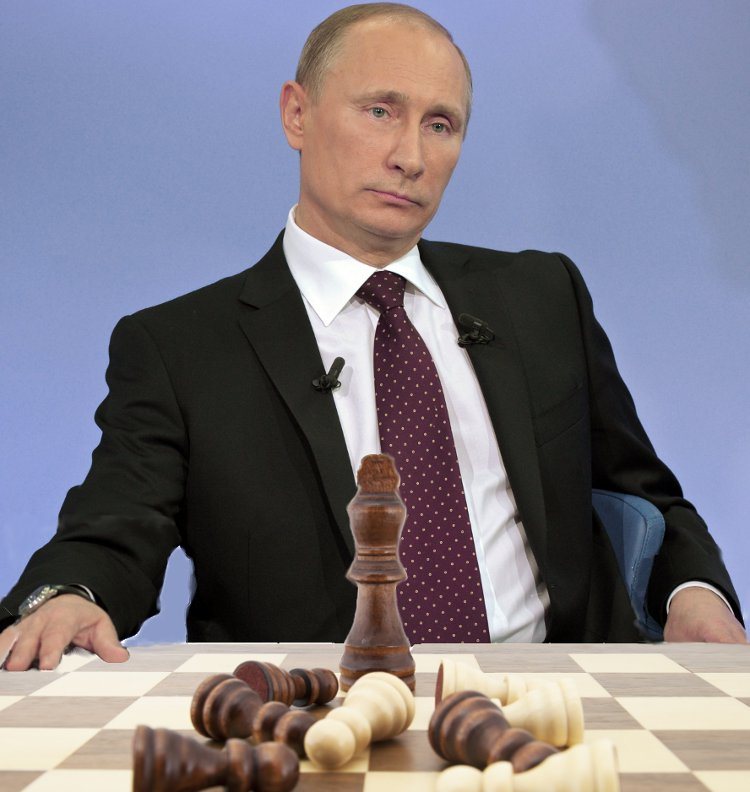
To me, it seems that the chief propaganda weapon employed by Russia over the last few years has been a portrayal of Russia as an ideal construct, an immaculate conception, a nation of supermen ruled by a nearly omniscient ruler. (A jiu-jitsu expert! A master chessman!) But behind the grandiose self projected by Russia, one can frequently find, er, contradictions - like the empty hypodermic syringes and pills that enabled certain strength athletes to cheat their way to Olympic gold medals. This is a nation whose leaders would have us to believe that it is All That And A Bag of Chips, a nation that cannot stand the thought that the rest of the world might regard it as a collection of rather ordinary, everyday человеки.
The truth is that behind its Potemkin Village facade is a nation that has for years suffered a crisis of youth suicides (see this and this also), a nation whose death rate has once again begun to exceed its rate of live births (see this, this and this), a nation in which over 600,000 women a year suffer domestic violence, a nation whose government is aiding and abetting the stripping of its assets by wealthy interests for personal gain, as seen in the battles of the Russian environmental movement to try to preserve national forests and parks from commercial development (see this and this). In other words, this is a nation of ordinary, fallen people in need of a Savior, Who is quite willing to save - as long as the people in need of saving are willing to engage in open, honest dialogue, including the open confession of sins. (Even a frank discussion with a team of decent mental health professionals would do a lot of good.) Yet this is the very thing that the leaders of Russian society seem unwilling to do, because such a dialogue would threaten the positions, prestige and image of people who currently enjoy positions of power in that society, and would force the leaders of that society to abandon their image of perfection. Case in point: for years, there has existed a women's rights movement in Russia which pushed for stronger legal protections for women endangered by domestic violence. They even managed to win some seeming victories. However, in this year, 2017, Vladimir Putin signed into law a bill drafted by the Russian Duma to de-criminalize domestic violence except in cases of injury requiring a hospital stay. That de-criminalization was pushed by the Russian Orthodox Church, by the way.
This is the nation which in our last U.S. election set about to re-arrange the United States according to its own liking, and threatened the lives of people like me in the process. Mr. Putin and Mr. Dugin, please get out of my living room.